

As tenants grow more selective, demand is concentrating into environments that align design, operations and tenant mix around how people actually spend time.
Take a look around most areas of the country, and it’s obvious to see that retail demand hasn’t disappeared. What it is doing, however, is showing up in fewer places. Tenants are increasingly gravitating to a certain pattern of projects. If you’re one of the lucky ones to possess said projects, leasing activity will likely remain robust, occupancy may stay consistent and reliable traffic will be generated.
In other words, you win.
What’s notable is that the projects “winning” don’t all look the same. Some are large-scale redevelopments anchored by entertainment and sports uses. Others are open-air centers built around community programming or mixed-use environments designed to keep people on site longer.
They may vary in scale, location and tenant mix, but they do have something in common. Strategic decisions were made about how these spaces are used, how activity is created and how demand is sustained over time.
For retail decision-makers, the implication is clear. Performance is less tied to traditional drivers like visibility or anchor tenancy alone and more dependent on whether a project can support repeat visits, longer dwell times, and a steady flow of activity throughout the day and week.
The following perspectives from developers, operators and designers highlight how that pattern is taking shape across the region, and where it translates into leasing momentum.
Rethinking the Anchor
By Brian Connolly, Founder and CEO, Feasibly in Park City, Utah
At the end of 2025, the U.S. had a projected total of 4,678 department store locations, a drop of more than 40 percent over a 10-year period, according to Statista. The retreat of this once-mighty retail format is especially pronounced out West. It’s a region that recently faced yet another wave of department store closures when Macy’s shuttered nine locations in California alone at the start of last year.
The question for retail landlords and developers now is less about whether these anchors will be replaced and more about what actually works in their place to drive consistent demand and support long-term asset performance. In a growing number of markets, the answer is experience-led anchors like sports facilities, entertainment venues and community hubs. But simply labeling something “experiential” is not what’s driving performance — the underlying mechanics of frequency, programming and spend conversion are.
This shift toward retail being organized around in-person events, community engagement and physical activity is often attributed to post-pandemic behavior, but the more durable driver is measurable: people are show ing up more often, staying longer and spending differently when there is a reason to return. The highest-performing retail projects being built today are structured around activity not as a concept, but as a quantifiable operating strategy. It’s one that requires quantifying visitor demand, building programming that drives frequency and aligning retail square footage with real spending patterns.
Creating an Activity Hub
As traditional anchors disappear, their vacant footprints are being aggressively backfilled by a variety of experiential tenants. The primary categories gaining traction include professional sports practice facilities tied to major leagues; multi-sport community and tournament complexes for things like pickleball, tennis and soccer; indoor activity parks for families; entertainment venues and mixed-use districts; and civic- and recreation-focused spaces integrated with retail, such as Bass Pro Shops, Cabela’s and REI.
These new anchors enjoy high-visit frequency, extended dwell time and the ability to attract regional visitors beyond the immediate trade area. More importantly, they change the trade area math, pulling from a wider radius and creating patterns of repeat visitation that traditional anchors rarely achieved in their later years.
Projects such as sports-focused facilities, entertainment venues and mixed-use districts tend to reshape how a center performs, not just how it fills space. They drive more stable traffic patterns across weekdays and non-peak hours, while increasing demand for adjacent small-shop and food-and-beverage spaces. They also shift the tenant mix toward uses tied to dwell time and repeat visits.
The key difference between traditional anchors like department stores, which operate in relative isolation, and modern experiential anchors is not just traffic, but interaction. Because demand is tied to programmed activity levels, these anchors create spillover visitors that adjacent tenants can actually capture — particularly concepts tied to time spent on-site, such as “eatertainment” operators like Puttshack and Chicken N Pickle.
Sizing Up the Challenge
Developing a high-performing experiential anchor is substantially more complex than opening a traditional department store and, in many cases, it functions less like leasing space and more like operating a business within the real estate. Experience-led projects demand a strong focus on programming and operations to foster active participation and consistent foot traffic. Year-round activity schedules drive consistency with league play, tournaments and recurring events that support repeat visits.
Sophisticated visitor demand modeling is also critical. Beyond trade area analysis, developers must quantify factors such as regional draw and visitor conversion into retail spend. Accurate sizing of retail space is essential, as square footage needs to be aligned with realistic demand rather than legacy assumptions.
The tenant mix also needs to reflect how visitors will use the asset. A visitor-oriented anchor, whether a sports facility or performing arts center, can drive interest in experiential retail throughout the property. For some sites and anchor types, it may even make sense to build hotels or multifamily housing to create a complete mixed-use destination.
Capital structure and partnerships are a key consideration when taking on complex anchor projects. Public-private partnerships (P3s) are often required to close feasibility gaps, particularly as construction and financing costs continue to rise. Depending on the nature of the project, developers may need to seek municipal alignment around tourism and economic development goals. In addition, working successfully with operators such as teams and event organizers is central to achieving high performance.
What’s Working and What’s Not
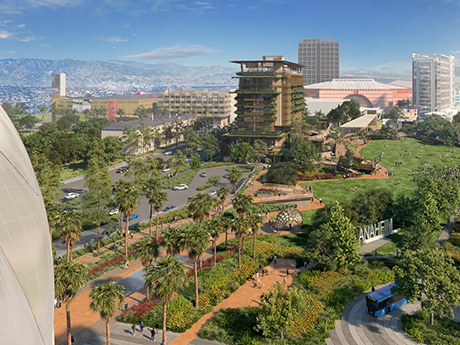
Despite the inherent challenges of this model, examples abound of developers in the Western U.S. spearheading major experience-led anchor projects. The owners of the Anaheim Ducks are developing OCVIBE, a 100-acre mixed-use project in Anaheim, California, that’s anchored by the Honda Center. The $4 billion entertainment district will blend office, retail and recreation adjacent to the sports venue.
Another notable project is the transformation of a former Macy’s store into a 146,000-square-foot NHL and NBA training and community facility in Sandy, Utah, by Smith Entertainment Group, owner of the Utah Mammoth ice hockey team. Farther north in Salt Lake City, Smith Entertainment Group is redeveloping the Delta Center arena as part of a broader effort to create a sports and entertainment district that extends activity beyond event nights into daily use.
In growth corridors like California’s Central Valley, markets like Tulare are pursuing entertainment-led redevelopment, seeking to capture regional demand that was previously unmet. One developer is working on an amateur sports facility featuring an indoor adventure park, complete with climbing walls and zip lines, that may also include an outdoor water park.
Of course, experience-led anchor projects are ambitious undertakings, and success isn’t guaranteed. Where projects fall short, the issue is rarely the concept itself — it’s misreading demand. Leaning too heavily on local demographics and failing to account for regional draw leads to poorly positioned properties. Single-anchor concepts without sufficient programming are likely to struggle, as are retail mixes that are misaligned with visitor behavior.
Adapting to the New Reality
As traditional shopping formats continue to falter, retail demand is increasingly being driven by activity levels and visit frequency. Financially viable projects require dynamic demand modeling that accounts for the realities of the market rather than static demographic assumptions.
Developers looking to reposition defunct anchor spaces into experience-led projects need to design and operate their assets as an ongoing business that can adapt to changing demand patterns. That means planning for activity, measuring it consistently and adjusting in real time — because in this model, performance is not just leased, it’s actively produced.
Programming as Infrastructure
By Bastian Peters, Managing Director of Retail Asset Management, Stockdale Capital Partners in Los Angeles
A fundamental shift is reshaping the retail landscape across the Western U.S. For decades, shopping centers were defined by their anchor tenants — department stores, big-box retailers and grocers that drove predictable traffic patterns. Today, that model is being reimagined. The most successful retail environments are no longer anchored by a single tenant, but by something far more dynamic: a consistent flow of activity driven by programming.
This evolution is not simply a response to ecommerce or changing consumer preferences. It reflects a deeper transformation in how people engage with physical space. In this environment, placemaking has emerged as one of the most powerful differentiators in retail — and, increasingly, a core strategy for leading owners and operators across the West.
At its core, placemaking is about creating environments that foster connection and identity. In practice, it is the intentional design and activation of space to encourage people to stay longer and return more often. In places like the West where outdoor lifestyles, favorable climates and strong local identities play an outsized role, this approach is proving especially impactful.
One of the clearest expressions of this is the rise of community-centric programming. Events and activations are no longer supplemental marketing tactics. They’re now essential traffic and engagement drivers. From farmers markets and fitness classes to cultural festivals and family oriented programming, these experiences create consistent reasons for consumers to visit beyond traditional shopping missions. More importantly, they create repeat visitation.
This strategy is being actively implemented at Stockdale’s the Oaks in Thousand Oaks, California, and Avenues at Northfield in Denver. The focus at these properties has shifted toward creating daily relevance in consumers’ lives through a steady cadence of community-driven programming. Recurring events like kids clubs, wellness programs, seasonal activations and family focused experiences are designed to transform visits from occasional trips into habitual engagement, creating a more predictable flow of traffic for tenants.
Programming also has a measurable impact on performance. Retailers increasingly value adjacency to high-traffic, experience-driven environments that deliver repeat visitation. For landlords, this translates into stronger leasing demand, improved dwell time and increased sales productivity across the tenant mix. At Avenues at Northfield, year-round events and outdoor activations aligned with Denver’s active lifestyle create a consistent rhythm of activity that benefits both tenants and the broader community. Similarly, at the Oaks, curated programming and experiential uses are repositioning the center as a destination where visitors spend extended, meaningful time.
Equally important is the evolution of the tenant mix itself. Traditional retail categories are being complemented — and, in many cases, replaced — by experiential, service-oriented and lifestyle-driven concepts that align with how consumers live today. For both assets, this includes partnerships with leading brands like Little Kitchen Academy, Wayfair and Life Time. These concepts reflect a broader shift toward tenants that offer more than products. Instead, they deliver experiences, services and everyday utility. This intentional curation positions the centers as integral parts of consumers’ daily routines, rather than destinations for occasional shopping.
The physical environment plays a critical supporting role in this transformation. Open-air layouts, pedestrian-friendly design and integrated green space are no longer “nice to have” but are now essential to a center’s relevance. Community gathering areas serve as flexible, multi-use environments that can host events, provide everyday gathering space, and create a visual and emotional focal point. Ongoing investment in these environments supports everything from informal daily use to large-scale activations, reinforcing a hospitality-driven approach to retail.
Here’s the thing, however. Design alone is not enough. To remain relevant, owners must actively manage and evolve these spaces. That means consistent programming, ongoing tenant curation and adapting to changing community demand. In this sense, retail ownership increasingly resembles hospitality: success depends on continuous engagement, not static design.
This shift is also redefining what it means to be a “neighborhood hub.” Historically, retail centers were transactional destinations. They were places people visited with a specific purpose and left once that purpose was fulfilled. Today’s leading centers function more like town squares, where people meet friends, attend events, participate in wellness activities and spend extended periods of time, often independent of a specific purchase.
For owners and operators, this presents both an opportunity and a challenge. Creating a true community hub requires an integrated approach across leasing, marketing and operations. Tenant mix must align with experience, marketing must prioritize ongoing engagement, and operations must support a higher level of activation and service.
The payoff is significant. Centers that successfully position themselves as community anchors are better insulated from market volatility and competitive pressures. They generate more consistent traffic, foster stronger tenant relationships and create more durable long-term value.
As the West continues to grow and evolve, this model will only become more important. The most effective anchors are no longer defined by a single tenant, but by the activity they generate.
The Shrinking Leasing Pool
By Victor Lorenzo, Architect, MBL Architecture in Vista, California
Retail isn’t disappearing, but it is becoming more selective.
Leasing activity across the Western U.S. is consolidating into fewer projects. The narrative that retail is “soft” misses what’s happening on the ground: demand hasn’t gone away, but it has narrowed. Tenants are becoming more selective about where they go and, as a result, leasing activity is concentrated in a smaller group of high-performing environments.
The word “destination” gets overused in retail, but today it has a more specific meaning. It’s not about scale or tenant count, but about giving people a reason to stay — and a reason to return.
Projects like North City in San Marcos, California, illustrate this shift. Rather than a traditional retail center, North City contains apartments, co-working spaces, a climbing gym, restaurants and small-format retail woven into a walkable environment. There are plazas, shaded walkways and space for events like art shows and farmers’ markets. The result is less a shopping trip and more time spent in a place.
The Rise of the ‘Mini-Campus’ Approach
A useful way to understand what’s working is to think about retail environments the same way you would think about a college campus. Individual components — buildings, tenants and open space — are designed to support a larger whole. No single element carries the experience.
The strongest gathering areas are being sized intentionally, creating the right level of energy and intimacy. While “placemaking” is often used to describe this approach, the impact goes beyond social gathering. Design strategies like landscaping, shading and thoughtful street layouts help slow movement and create a safer environment, particularly in family oriented spaces like playgrounds. At the same time, these elements encourage interaction between tenants and keep spaces usable throughout the day.
The layering of wide sidewalks with dense, drought-tolerant landscaping (xeriscaping), for example, creates a sense of separation from vehicles and promotes a safe pedestrian experience. These design choices are not just aesthetic. They influence movement, extend dwell time and ultimately affect tenant performance.
What’s Driving Today’s Leasing Decisions
In a traditional center, performance often depends on a few key drivers: an anchor tenant, strong visibility or proximity to traffic. Those factors are no longer enough on their own. Tenants are looking for environments where activity is built into the project.
Mixed-use developments are increasingly winning out at the site selection level because they offer a more reliable path to performance. Shared-use dynamics, such as the ability to share parking between residential, office and retail users with different peak hours, can reduce the need for underutilized parking. Residential units, office users and coworking spaces generate consistent daily traffic, while food, fitness and entertainment extend activity beyond standard retail hours. That consistency reduces risk.
In some cases, retail is treated as a strategic component rather than a primary revenue driver. Developers are willing to curate smaller, more specialized tenants, including niche food concepts and boutique gyms, because they contribute to the overall appeal of the project. For tenants, the benefit is clear: they are plugging into an existing ecosystem with built-in demand.
Projects like the LAB in Orange County, California, and Platform in Culver City, California, succeed for similar reasons. Though they differ in scale and tenant mix, both prioritize walkability, integrate indoor and outdoor space, and sustain activity through programming and events.
To make programming work, the physical design of a site has to support it. Not every space can be activated simply because it’s available. Intentional design creates a foundation for activity that continues even as tenants turn over, supporting long-term leasing stability.
The Growing Divide
The flip side of this selectivity is that many projects aren’t making the cut. This is evident in mixed-use developments where ground-floor retail was included as a standard component but never fully leased. The assumption that retail will “fill in” no longer holds.
Retail isn’t going away, but it is becoming more intentional. For developers, that means being more selective about where and how retail is deployed. It must be part of a broader strategy centered on how people spend time, not just how they shop.
For designers, it requires a shift in thinking. The goal is no longer to create a retail center. It is to create an environment where retail can perform as part of something larger. The projects that understand that distinction are leasing. Others are still trying to catch up.
This article was compiled and edited by Nellie Day, and was originally published in the May 2026 issue of Shopping Center Business magazine.