

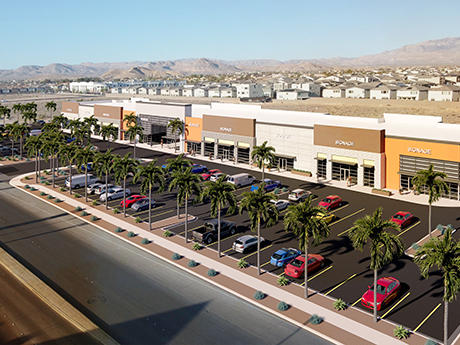
Financing, subcontractors, materials pricing and tariffs have had an impact on retail construction. Contractors are leveraging AI and other new technologies to reduce risk and harness data.
Let’s get down to brass tacks: there’s not a lot of new retail space being built. What is getting developed reflects a fundamental shift in how retail functions. At the same time, construction itself is becoming more strategic and tech enabled. Developers and contractors are leveraging data, artificial intelligence (AI) and flexible design approaches to better predict demand, reduce risk and adapt spaces for multiple tenants or uses over time. The result is a sector that is leaner, more intentional and increasingly focused on creating places people want to visit.
The Big Picture: How the Market Has Changed
Retail construction has shifted significantly from the pre-pandemic era to today, shaped by higher material costs, disrupted supply chains and evolving consumer demand. Before 2020, projects benefitted from relatively stable pricing, predictable timelines and a strong emphasis on in-person shopping environments. Since then, inflation and global supply chain volatiltiy have driven up the cost of key materials, while also extending lead times and forcing developers to plan more conservatively.
Carolyn Shames, CEO and president of Shames Construction, shared an anecdote about two identical Walmarts that were built by her company — one before the COVID-19 pandemic and one after. The difference in price was $10 million.
“Every project is over budget because the budgets are old and the costs have exponentially changed,” says Shames.
At the same time, consumer behavior has pivoted toward e-commerce and hybrid shopping experiences, prompting retailers to downsize footprints, prioritize flexible layouts and invest in omnichannel-ready spaces like curbside pickup zones and micro-fulfillment areas.
“We’ve seen huge growth in the online pickup and delivery portion of the business, where customers can pull up to the store, click the app and say, ‘I’m here,’ and the groceries and products are delivered,” says Darin Ross, CEO and president of FMGI. “The ability to be able to handle that online portion is important.”
Larry Monkarsh of LM Construction shared that tenant expectations have also shifted from pre-pandemic times. For example, the construction firm is currently working with Domino’s Pizza to adapt its current dining room and front of house structure to support the needs of both the client and consumer.
Whereas Domino’s was once building restaurants with smaller dining rooms and space for customers to watch employees make the pizza, the quick-service food chain is now adjusting its layout to take that space back.
“They’ve had different generations [of leadership] come through [Domino’s] and everybody’s got their idea of how to change it,” explained Monkarsh. “Since COVID hit, nobody wants to come into the store anymore, and [Domino’s] wants to go back to delivery, so now we’re repurposing their space to maximize productivity.”
Economic Pressures
While tenants continue to adapt their retail spaces to meet evolving consumer preferences, contractors are simultaneously grappling with a different set of challenges driven by ongoing economic pressures, such as labor shortages, volatile material costs and high inflation.
“Navigating the uncertain waters has been the largest challenge,” explained Monkarsh. “I typically have my TV on and I’m checking what the latest news is because things are changing so quickly.”
While structural wood, concrete and steel are mostly stabilized, Monkarsh specifically noted struggles with obtaining aluminum. A combination of surging demand from tech-driven industries (like data centers or electric vehicle production), supply chain constraints and elevated tariffs has made it harder for contractors to meet that overall demand for clients.
In response, LM Construction has opted to find non-aluminum options for storefronts that are composite-based, although Monkarsh says it’s not a proven system yet.
“Somebody’s getting rich somewhere off of this volatility, but it doesn’t translate down to our level,” says Monkarsh.
Shames of Shames Construction illustrates that tight capital markets have also become a problem in the current construction environment.
“When interest rates were zero to three percent, the financial people said, ‘borrow money now, because it’s never going to be this cheap again.’ Now, the mindset of five or six percent interest has gotten even wealthy people freaked out,” says Shames. “They’re sitting on their money and don’t want to spend it because they don’t know exactly how much it’s going to cost them in the future or if they’re going to be able to even get a loan.”
Ryan McClendon, executive vice president of ARCO/Murray, says higher interest rates and tighter capital are impacting his firm’s construction pipeline.
“They have lengthened the time of getting projects started, and it has taken longer in the feasibility and entitlement stages to get things off center, along with the fluctuation in the uncertainty and pricing,” says McClendon. “It’s slowed our pre-construction efforts to try to assist the client on getting the job started and it’s causing some more earlier phase work.”
Diesel prices have simultaneously skyrocketed due to the Iran war, creating oil supply fears. As of mid-April, international oil prices have climbed above $100 a barrel, with national average diesel prices reaching $5.65 per gallon, according to The New York Times.
“We’re starting to get those notices from our site contractors that their trucking companies are going to have to raise their rates,” says Ross of FMGI. “So we’re starting to have those conversations with our customers to try and identify what those numbers are and how it’s going to impact the job.”
Taking a Risk
Contractors operating in today’s retail development climate face a layered set of risks that extend well beyond basic cost control. The bidding process itself has become increasingly competitive and uncertain, often forcing contractors to commit to tight margins with limited visibility into shifting material prices or project scope.
Reliance on an often overstretched and sometimes inexperienced subcontractor pool can also lead to quality issues, miscommunication and scheduling setbacks, as highlighted by Shames.
Shames shared that the lack of trades and trained subcontractors are one of the biggest risks because “you could end up with somebody who doesn’t know what they’re doing” in the bidding process.
“You just have to hope and pray you both didn’t leave something out,” says Shames.
Ross of FMGI also noted the labor market itself is shrinking, and as a result, all of the contractors are competing for the same subcontractors.
“You really try to get those allegiances with subcontractor partners so that you can get first dibs on projects,” says Ross.
According to a workforce survey conducted by the Associated General Contractors of America and the National Center for Construction Education and Research (NCCER), up to 92 percent of firms are struggling to find qualified workers.
Sources interviewed for this article particularly emphasized the complicated permitting process and how it has become more elongated throughout the years.
“It started during COVID when everybody left the office,” explains Ross. “Most of those municipalities have gotten everybody back, but they’re still working through the pipeline and getting people used to being in the office again.”
Monkarsh of LM Construction also added that, “people don’t have the same urgency.”
“There’s a lot of bureaucracy in trying to obtain building permits,” says Monkarsh. “Certain things at the municipal level stop and if we can’t get that easement, we can’t proceed with checking the [client’s] plan — those are the kind of issues that have made the permitting phase difficult.”
Many retail projects now involve adaptive reuses, requiring contractors to work in or around active public spaces, which introduces safety concerns, logistical challenges and heightened liability.
“There’s always a risk with the unknowns that go along with some of these conversions, whether you’re removing part of a structure, moving a slab or removing walls, but that’s an inherent risk we all share together,” says McClendon.
Contractors are simultaneously struggling with financing projects caused by cash flow gaps and restraints, as well as a higher cost of borrowing.
“Last year, it was ‘stay alive in 2025,’ just basically to get through the year, and that in 2026, everything was going to get released. Well, here we are just beyond the first quarter, and the gates have yet to open,” says Monkarsh. “There’s money out there, but it’s expensive and it’s difficult, so it has been tough getting the financing.”
However, if LM Construction has any advice for retailers, it’s to not “bite off more than you can chew.”
“The best way to minimize risk [in our industry] is to make sure that the retailers and developers are strong financially,” says Monkarsh. “The old saying is, ‘it’s better to have a smaller restaurant with a line out the door than a larger restaurant with empty tables,’ so that’s the concept I give to retailers and retail developers.”
How Contractors Are Adapting
As the retail landscape continues to be reshaped by various forces, contractors are being pushed to rethink not just how they manage uncertainty, but how they operate altogether. The traditional playbook is no longer enough in an environment defined by rapid technological change and shifting consumer expectations.
In response, contractors are beginning to adapt in more strategic and forward-looking ways, often embracing tools like artificial intelligence (AI) to improve efficiency, respond to personalized customer demands and reimagining retail spaces to appeal to multiple generations.
Ross of FMGI shared an anecdote about how his firm is getting ready to test Boston Dynamics’ robotic dog on a ground-up grocery store in Fort Myers, Florida. FMGI is utilizing the robot to check for safety violations during construction, while also reducing the need of the company’s staff to execute redundant tasks.
“This industry was not very technologically savvy for a number of years, so the catch up is a little slow to get going, but we see it moving rapidly in that direction,” says Ross.
McClendon of ARCO/Murray noted that his company has heavily invested in AI tools and data platforms to stay ahead. The Chicago area-based design-build firm recently rolled out a new system which uses advanced project management analytics software to track costs, risks and scheduling in real time.
ARCO/Murray has also deployed an AI assistance software to the fields to find information quickly, automate routine tasks and improve coordination.
“Using AI software, heavy investment into engineering and architecture has helped us stay competitive, because we’re always looking for solutions on how we can reduce the hard cost of construction, while keeping the feel of the building,” says McClendon.
“That’s where we bring a lot of value to our clients because we’re looking for solutions.”
Alongside AI advancements, Monkarsh described that being flexible during the construction process is not only helpful, but necessary when possible.
For example, a project that was originally planned as a 1,200-square-foot space, could turn into a 2,800-square-foot space, and contractors have to be able to pivot.
“Oftentimes, we’re dictated by the client, but we always try to understand that there’s going to be a second, third, fourth and fifth generation tenant,” says Monkarsh of LM Construction.
A Resilient But Evolving Industry
Retail construction stands at an interesting intersection: shaped by disruption, yet defined by its ability to adapt. At the same time, the pace of change leaves room for interpretation. How companies respond — what they priortize, where they invest and how they collaborate — offers a clearer view of where retail construction is headed next.
“The optimistic thing I’ve seen is that the younger generation is starting to come back into the trades,” says Monkarsh of LM Construction. “Because if you’re not really into AI — and you want to be an electrician or mechanic — then you’ve still got that pathway. But, we have to get the next generation interested, so we’re not a dying breed.”
— Abby Cox
This article was originally published in the April 2026 issue of Shopping Center Business magazine.