

Narrowing cap rate spreads between grocery-anchored and power centers, combined with resilient tenant demand, are pushing more private investors into large-format retail.
For years, junior box-anchored shopping centers were primarily acquired by public REITs and other institutional investors. With transaction sizes often ranging from $20 million to $100 million, these assets were considered out of reach for most private buyers. That dynamic has shifted. A broader pool of private investors is now competing for these centers, reshaping the buyer landscape and creating new liquidity opportunities for owners and developers.
This shift comes amid stronger-than-expected retail investment activity nationwide. Despite perceptions that much of 2025 was a slow or uncertain year for the sector, the numbers point to a different story.
According to CoStar, total retail transaction volume over $1 million reached 11,224 transactions totaling $39.9 billion in the first half of 2025, an increase of about 11 percent in total sales volume and roughly 18 percent in the number of properties sold from a year earlier.
Momentum carried into the third quarter, with rising sales volume and steady transaction activity. CoStar reports that retail properties over $1 million totaled 6,032 transactions, representing $24 billion in the third quarter, up nearly 24 percent in sales volume and just over 13 percent in transaction count from the same period in 2024.
The pace accelerated again in the fourth quarter, when retail properties over $1 million recorded 7,083 transactions totaling $29.66 billion. That compares with 5,550 transactions and $19.1 billion in the fourth quarter of 2024 and reflects a meaningful uptick from third quarter 2025 activity, with transactions rising more than 17 percent and sales volume increasing nearly 24 percent over the prior quarter. Together, the results show a retail investment market that strengthened steadily through year end, setting the stage for elevated deal activity in the first quarter of 2026.
The strong market backdrop paralleled Hanley Investment Group’s results. The firm closed 94 deals in 90 days during the fourth quarter, marking the highest quarterly sales volume in its 20-year history and the largest number of anchored shopping centers it has sold in a single year.
Within large-format retail specifically, private capital has become increasingly dominant. Private buyers accounted for 72 percent of purchasers of retail properties over 80,000 square feet in 2024, up from 50 percent in 2021, a clear indication that investor demand for junior-box and power center assets has expanded meaningfully.
Several underlying forces are driving this shift. Properties with a stable mix of value-oriented retailers, regional dominance, and favorable demographics align with current demand for retail investments that provide reliable cash flow and long-term growth potential. As grocery-anchored centers remain scarce and cap rates compressed, private buyers are increasingly turning to junior-box centers as a viable alternative.
While grocery-anchored centers have long traded at a premium for their essential nature and durable sales performance, buyers seeking higher yields are now pursuing power centers, driving faster cap rate compression. The spread between grocery-anchored and power-center cap rates narrowed from 166 basis points in 2023 to roughly 80 basis points in 2025, reflecting stronger investor demand for large-format retail and underscoring how yield-oriented private buyers are reshaping pricing across the category.
Hanley Investment Group has been at the forefront of this trend. In the last two years, the firm has sold 13 junior box-anchored shopping centers for a combined total of approximately $300 million and 2 million square feet. In the last nine months of 2025, Hanley completed seven transactions totaling more than $150 million and nearly 1 million square feet. (For the non-California transactions mentioned below, Hanley Investment Group completed the deals in association with ParaSell, Inc.)
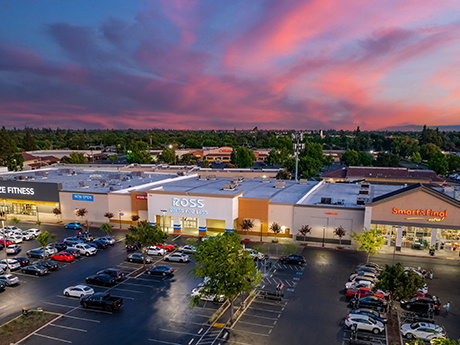
At Pacific Town Center in Stockton, California, Hanley Investment Group arranged the $27 million sale of a newly remodeled, fully leased, 143,000-square-foot property anchored by Smart & Final Extra!, Chuze Fitness and Ross Dress for Less. The seller was Brixton Capital, a vertically integrated operator of retail and multifamily properties based in San Diego. The buyer was CJ Park & Associates, a private investment firm based in Los Angeles. The deal underscored the appeal of junior box retail for private investors, driven by strong tenants and recent reinvestment.
Franklin Commons in Franklin, Indiana, at 86,000 square feet, illustrates how private capital is expanding into suburban metro communities with affluent, growing demographics. Built in 2017, the center is 100 percent occupied by national tenants, including Marshalls, Ross Dress for Less, PetSmart, and Five Below, and shadow-anchored by Kroger Marketplace serving the Indianapolis metro. The center sold for $10.9 million to a private Northern California buyer who had recently acquired a comparable junior-box anchored center on the East Coast.
Lakeview Pointe in Stillwater, Oklahoma, totaling over 207,000 square feet, demonstrates the strength of secondary markets where junior box anchors deliver consistent rent rolls and dependable consumer traffic. Built in 2006, the center has maintained longterm historical occupancy, recently completed new leasing activity, and was 95 percent occupied at the time of sale. Lakeview Pointe records 2.3 million annual visits and is home to Ross, Belk, Five Below, Best Buy, and Petco, just two miles north of Oklahoma State University. The $22.5 million transaction with a private Midwest buyer illustrates how private capital is increasingly willing to pursue larger junior-box assets when fundamentals align.
Sunset Plaza in San Angelo, Texas, one of the largest cities in West Texas, totals 92,000 square feet and is shadow-anchored by Target (not included in the sale). The fully occupied center features a tenant mix that is 98 percent national retailers, including Ross Dress for Less, HomeGoods, Petco and Five Below, and has recently added new leases and extended leases that strengthened the tenant mix. Built in 2005, the property benefits from its established regional draw, including proximity to Sunset Mall. The buyer, a private investor from Mexico City who had recently acquired a similar power center in Texas, brought experience with the asset type that helped ensure a smooth closing.
Green Bay Plaza in Green Bay, Wisconsin, sold for $25.35 million and totals 233,000 square feet. Hanley generated multiple qualified offers from private and mid-market investors based in California and the Midwest, facilitating a competitive best-and-final bidding process that maximized value for the seller. Located just two miles from Lambeau Field, home of the Green Bay Packers, the property benefits from regional visibility and traffic. At the time of sale, Green Bay Plaza was 89 percent occupied and featured a dominant lineup of national and regional tenants, including T.J. Maxx, HomeGoods, Ross Dress for Less, Burlington, Dollar Tree and Sierra, along with Five Below, Crunch Fitness and Skechers Outlet.
The buyer was Core Acquisitions of Chicago, a commercial real estate investment, development and asset management company.
In Santa Clarita, California, Hanley Investment Group arranged two separate off-market transactions at Centre Pointe Marketplace totaling $33.8 million. The sales included the two-tenant, 84,000-square-foot Dick’s Sporting Goods and Burlington property, where Burlington recently opened in the former JOANN’s space, and the newly renovated, 31,000-square-foot single-tenant Sky Zone. This breakup-sale strategy allowed Hanley to unlock greater value for the seller by matching each asset with its ideal buyer: a REIT for the multi-tenant property and a private 1031 buyer for the single-tenant opportunity.
Finally, Northland Square in Cedar Rapids, Iowa, sold for $17.5 million and totals 106,500 square feet. The fully occupied center is leased to national tenants including T.J. Maxx, Barnes & Noble, OfficeMax, Old Navy, Famous Footwear, and Hallmark. Renovated in 2020, the property offers excellent accessibility and visibility from a primary thoroughfare. The buyer, a private investor based in Southern California, acquired one of Iowa’s top-performing shopping centers. Many tenants had recently signed longterm lease extensions, reinforcing the property’s stability. Northland Square is adjacent to Lindale Mall, the top regional mall in Iowa, which draws 4.7 million annual visitors.
Tenant Viability & Outlook
Resilient tenant demand is driving stability across junior box–anchored centers, even as weaker chains exit. The “retail apocalypse” narrative has been overstated; while some chains have exited, others are expanding aggressively into vacated boxes. Burlington acquired 45 former JOANN locations in 2025 following JOANN’s bankruptcy, continuing its strategy of opportunistically backfilling former Bed Bath & Beyond and now JOANN sites. A handful of JOANN locations are also being repurposed by Hobby Lobby and Boot Barn, underscoring the diversity of demand for these spaces.
Dollar Tree assumed about 170 former 99 Cents Only stores after that chain shuttered all 370 of its locations in 2024, expanding into priority markets across California, Arizona, Nevada, and Texas.
Big Lots filed for bankruptcy in late 2024, and in early 2025 Variety Wholesalers acquired 219 of its stores, reopening them under the Big Lots banner. The phased re-openings began in April and were completed by summer, preserving the brand’s presence in multiple states and demonstrating how opportunistic buyers are keeping vacated boxes active.
Closures have continued among weaker chains, including Party City, Rite Aid, and At Home. Expansion, however, remains steady. Burlington, TJX (Marshalls, HomeGoods, Sierra, HomeSense), Ross, Five Below, Dollar Tree, Hobby Lobby, Boot Barn, Grocery Outlet, and ALDI are all opening new stores, often in the same junior box–anchored centers once dominated by institutional investors. TJX alone added more than 130 stores globally in 2025, with the majority in the U.S., reinforcing the durability of the off-price model.
2026 Market Dynamics
Looking ahead, junior box-anchored shopping centers are expected to remain a focal point for private capital in 2026. With institutional investors continuing to target grocery-anchored assets, private buyers are likely to dominate bidding for junior box centers, particularly in secondary and tertiary markets where pricing remains accessible.
Loan maturities are expected to bring additional supply to market. Many owners who financed acquisitions or refinancings in the last cycle are now facing debt coming due, often at higher interest rates than their existing loans. For some, this will trigger recapitalizations or dispositions, creating opportunities for buyers ready to transact.
Vacancies are not necessarily a negative. Expanding retailers are actively backfilling boxes, and many legacy leases are considered below current market rents. If a tenant vacates, owners can often release the space at higher lease rates, improving NOI and longterm value.
Competitive processes, premium pricing in midsize markets and the resilience of value-oriented retailers suggest that this category will continue to gain momentum as a preferred investment strategy in the year ahead.
Kevin Fryman is an executive vice president with Hanley Investment Group Real Estate Advisors.
This article was originally published in the April 2026 issue of Shopping Center Business magazine.