

Why landlords are turning to light-infrastructure food concepts to fill retail dead zones.
Landlords and shopping center owners are facing a familiar problem. Many retail properties have space that gets foot traffic but doesn’t work for traditional restaurants. Old kiosks, narrow inline units, corridors and spaces that cannot support full restaurant infrastructure are hard to lease. Too often, these spaces sit empty.
At the same time, many food operators want to expand but can’t justify the cost, time or risk of a full restaurant buildout. Rents are high. Construction takes longer. Equipment and labor costs keep rising. The result is a gap between available space and the type of tenants most landlords are seeking.
Across many shopping centers, there are spaces that don’t make sense for a full restaurant. Smaller food concepts are able to step into those locations and operate with far less infrastructure. While local requirements vary and some cities may still require a grease trap, these concepts generally avoid the need for heavy kitchen systems. As a result, vacant space gets filled, and operators can grow without the burden of large builds or major construction.
Light infrastructure food concepts help close that gap.
I’ve seen this shift clearly through Onigilly. When I started the brand in 2008, it was a food cart. That experience shaped our thinking early. We learned how much could be done with limited space, minimal equipment and a focused menu. Over time, that approach turned into a fast-casual model designed to work in smaller footprints.
After the pandemic, that model became even more relevant. Malls and shopping centers had space that could not support full kitchens but still had strong foot traffic. Instead of forcing a traditional restaurant into those locations, we leaned into formats that fit the space.
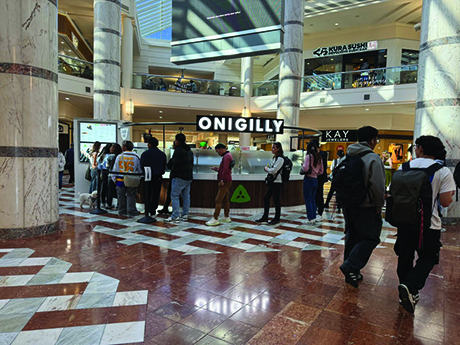
Most Onigilly locations operate in roughly 300 to 500 square feet. That allows placement in kiosks, corridors and other underused areas. Our on-site preparation is limited to cooking rice, which does not require hooded kitchen equipment and does not create the strong odors typically associated with full-service restaurants. That opens up real estate options that many restaurant brands cannot use.
For landlords, this solves a real problem. These concepts activate areas that would otherwise remain vacant. They bring consistent traffic without the cost or risk of heavy infrastructure. Smaller footprints also allow landlords to lease spaces that don’t fit standard restaurant layouts.
For operators, the benefits are just as practical. Smaller spaces mean lower rent and shorter build times. Construction costs are easier to manage. Operations are simpler. Staffing needs are limited. All of this supports stronger unit-level economics compared to many traditional fast-casual restaurants.
One important lesson is that sales are not tied to square footage. Sales come from traffic, speed and efficiency. Compact layouts force better design. Every station has a purpose. The flow of orders matters. When the model is built for throughput, smaller spaces can perform very well.
Light infrastructure concepts make site selection easier. Operators are not limited to traditional in-line restaurant spaces and can use areas that are often overlooked. That flexibility can shorten build timelines and reduce permitting delays.
Smaller formats make landlord discussions more straightforward. Buildouts are easier to plan and timelines are easier to manage. With corporate support regarding site selection and leasing, franchisees can move from agreement to opening more quickly.
This model creates a clear benefit for both parties. Landlords fill difficult spaces and improve overall center activity. Operators grow without taking on unnecessary cost or complexity. Neither side has to compromise to make the deal work.
Retail real estate has changed, and operators and landlords are adjusting to it. Concepts that work in smaller, simpler spaces have more room to grow. For landlords, those concepts provide additional ways to lease space and keep centers active.
Light infrastructure food concepts are not a workaround. They are a practical response to how shopping centers function today. When done correctly, they turn empty space into productive space and create better outcomes for everyone involved.
Koji Kanematsu is founder and CEO of Onigilly Japanese Kitchen, a fast-casual franchise that brings Japan’s favorite grab-and-go food — onigiri rice balls — to the U.S. Founded in 2008, Onigilly has grown from a food cart in San Francisco to a scalable franchise concept.
This article was originally published in the March 2026 issue of Shopping Center Business magazine.