

The younger generation is entering the workforce and influencing retailers. Here is how they are changing retail.
In the digital age, nearly everything is accessible online — entertainment, shopping, friendship, you name it. With a few taps on a screen, we can order three pairs of jeans, have a pizza delivered, and carry on a meaningful conversation without ever leaving the couch. Considering that Generation Z — those born roughly between 1996 and 2013 — has grown up immersed in this digital reality, it would be easy to assume they have little interest in traditional, in-person experiences. Surprisingly, the opposite is true. From pop-ups, influencers, to retail, Gen Z are securing their Labubus to their bags and heading out the door to shake up our understanding of successful contemporary retail experiences.
After coming of age during COVID, living through what has been called an “epidemic of loneliness,” Gen Z is craving in person experiences more than ever, and where better to go with your friends than the mall? A reported 69 percent of Gen Z shoppers say they prefer shopping in brick-and-mortar stores over online alternatives. However, their renewed interest in physical spaces doesn’t mean a return to retail as we once knew it. Instead, Gen Z is fundamentally reshaping what in-person shopping and entertainment look like by pushing brands to meet them where they are through hybrid shopping models. While Gen Z is digitally fluent, they still value the ability to see, touch, try on, and pick up products in person. Nearly three in four Gen Z shoppers visit physical stores weekly, and many describe shopping as an experience rather than a simple transaction, according to Retail Dive.
Brands like SKIMS exemplify this evolution. What began as a primarily online brand has expanded into brick-and-mortar locations nationwide. RDC has served as architect of record for multiple SKIMS locations, helping translate the brand’s digital identity into physical space. Rounded-edge fixtures emphasize flexibility and inclusivity, while Corian displays and tonal ultra-suede elements enhance cohesion. Mezzanine levels offer open sightlines, and luminous fitting rooms with wraparound mirrors and soft lighting create a confidence-boosting environment. The neutral palette and minimalist, monolithic aesthetic immerse shoppers in the SKIMS brand while showcasing a wide range of products — from loungewear and shapewear to menswear and limited-edition collaborations. These stores are not just places to buy clothing; they are carefully designed destinations that redefine what modern retail can be.
Similarly, Catbird’s nationwide expansion reflects Gen Z’s appetite for intimate, meaningful experiences. The Brooklyn-based jewelry brand has cultivated a devoted following through celebrity sightings, collaborations, and a strong sense of authenticity. RDC has worked closely with Catbird to bring its signature charm to new locations, including Chicago. There, whimsical yet refined architectural details, softly lit displays, vintage-inspired furnishings, and custom millwork create a space that feels both personal and magical. The brand’s iconic Forever Bracelet welding annex turns the store into a destination, offering customers a lasting, memory-driven experience rather than a simple purchase.
Fifteen-plus years ago, the ideal mall looked very different. The guiding philosophy was simple: fewer distractions meant more shopping. After all, if you were sitting down, you weren’t spending money. But that model is now changing. Today’s consumers, especially Gen Z, aren’t just looking for a place to shop; they’re looking for a destination.
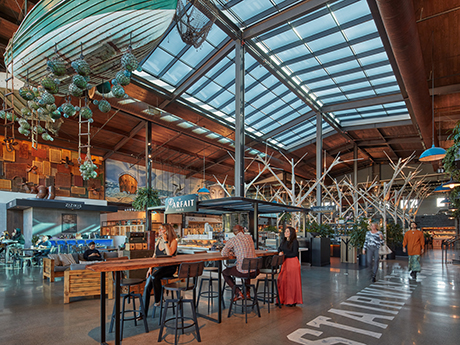
Modern retail environments are being reimagined as places to linger, connect, and escape. Seating pockets integrated into lush landscaping invite visitors to stay awhile. Grassy lawns host CrossFit classes, concerts, makers’ markets, and dog-friendly events.
Pop-up shops mirror what’s trending on social media. Coffee, boba, and the dessert you just saw on TikTok are as essential as the stores themselves. Luxurious seating that swings, swivels, or rocks; thoughtful pavement patterns; immersive signage; and carefully curated landscape lighting all contribute to spaces that feel elevated, intentional, and multifunctional. Unlike their millennial predecessors, Gen Z wants to feel like a million bucks without spending more than $30 — and the environments they frequent need to support that narrative to earn repeat visits.
Projects such as The Glades in Boca Raton, Florida, and the Skydeck in Del Mar, California, exemplify this shift. The Glades, a proposed 200,000-square-foot luxury retail and food-and-beverage development, fully embraces the multifunctional, experience-driven model Gen Z craves. From a restaurant row connected by a meandering landscaped pathway to a central green with a stage designed for events, the project is intentionally layered. Gastronomic dining experiences at projects like the Sky Deck offer quick, casual food and drink options allowing younger less monetarily established folks to participate in the fun. Each dining pocket feels transportive, with curated lighting, overhead elements, and signage that clearly distinguish one experience from the next.
Gen Z values feeling upscale — even when spending modestly. Open floor plans, flexible seating, and high-end design cues allow someone to grab an inexpensive coffee while still participating in a luxury-adjacent experience. The Glades also offers an ideal venue for events, something Gen Z actively seeks out. Concerts, yoga classes, makers’ markets, or even influencer-hosted gatherings on the central green transform retail into community infrastructure rather than a transactional stop.
At a broader scale, Gen Z is redefining the retail experience altogether. As this generation enters the market as serious consumers, brands and shopping environments have been forced to adapt to new expectations. Experiences, aesthetics, and atmosphere matter deeply. Raised in the digital age, Gen Z is heavily influenced by social media and online personalities, making pop-ups, immersive in-store activations, and “Instagrammable” moments essential tools for engagement. In fact, 43 percent of Gen Z shoppers say stores should include social spaces like cafés or snack bars, framing shopping as a place to hang out, connect, and create a sense of community.
Together, projects like The Glades, SKIMS, Skydeck, and Catbird illustrate that Gen Z is transforming retail. By prioritizing experience, atmosphere, community, and emotional connection, this generation is elevating physical retail into something richer, more social, and more meaningful than ever before.
Vanessa Garcia, Natalie Haub and Jeimmy Orellana are Gen Z team members at Long Beach, California-based architecture firm RDC. Garcia serves on the store planning team, Haub is a designer and Orellana serves as marketing specialist at the firm, which concentrates its work in retail architecture and design.
This article was originally published in the February 2026 issue of Shopping Center Business magazine.