

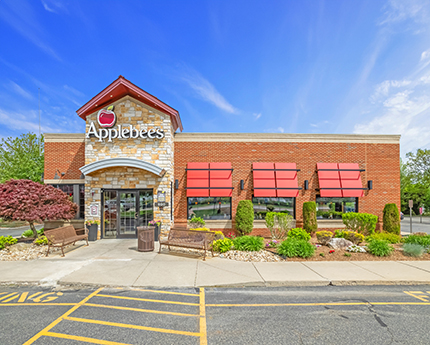
After a few years of malaise, the forecast for single-tenant net lease retail properties is on the upswing for 2026.
Activity in the single-tenant net lease (STNL) retail sector is ramping up after several years of a sluggish market. While lower interest rates may be paving the way for good times ahead, the market is seeing increased activity in the meantime from buyers and sellers seeing eye-to-eye for the first time in a while. That resulted in many investment sales firms posting a strong performance in 2025, with 2026 looking even brighter.
“Momentum going into the first quarter of 2026 is extremely strong across the country,” says Robert Horvath, executive vice president with Boston-based Horvath & Tremblay. “Any good broker who is not busy right now — there is probably something wrong with them.”
Many of the investment sales brokers that SCB spoke with for this article reported that activity was on the rise, with many seeing double-digit increases in volume. That bodes well for 2026, with some caveats.
“Some industry sources have reported net lease investment sales up roughly 20 to 25 percent year over year, which generally aligns with what we are seeing,” says Jeffrey Thomas, CEO of Thomas Company. “That said, the increase in interest is not indiscriminate. Buyers are still highly selective and focused on assets with clear tenant credit, defensible real estate and lease structures that minimize landlord risk. The market is healthier, but’s also more disciplined than it was in the ultra-low rate environment.”
As the sector heads into 2026, SCB examines activity in the space, looking at projections on volume, sales activity, cap rates and supply and demand.
Volume and Velocity
2025 started slowly, following the lead of 2023 and 2024. For the past several years, the net lease sector has seen a disconnect between sellers’ asking prices and the prices that buyers were willing to pay. Deals only transacted when the two parties came to the table with realistic expectations. That gap has dissipated in the past three quarters.
“We are seeing a gradual but real increase in sales volume, along with improved velocity, particularly where pricing expectations are realistic,” says Thomas. “Overall, buyers and sellers are closer on value, which naturally leads to more transactions.”
“Transaction activity surged in the second half of 2025,” adds Bill Asher, executive vice president of Corona del Mar, California-based Hanley Investment Group. “Pent-up demand and impatient capital, combined with an urgency to close deals before year’s end due to tax planning, loan maturities and capital agreements created the busiest third and fourth quarters since 2021.”
Investment sales brokers say that the disconnect still exists, but it is really an asset-by-asset, deal-by-deal issue. Some buyers have not realized the market is seeing more activity, weakening their bargaining power.
“Good product is moving pretty quickly,” says Horvath. “If you are not aggressive with certain assets, you are not going to be able to execute in this marketplace. Some buyers are trying to use this market to their advantage. I don’t think they are recognizing where the market is right now. They think that they have more leverage than they actually do.”
What’s more, some sellers just aren’t connecting with the realities of pricing in the market. Many still have expectations that they will get the same strong prices for their assets that they did during the boom the sector experienced in 2020-2021.
“We are seeing increased velocity, but it is uneven,” says Adam Scherr, managing director of Sands Investment Group. “Assets that are priced correctly and tied to tenants with proven unit-level performance are trading. Sellers who are still anchored to 2021 pricing are not. We saw this play out clearly at the end of 2025, when deals that sat most of the year finally moved once expectations reset — once investors felt that the ‘economic shoe’ wasn’t going to drop in 2025, after all.”
Times have changed over the past several years for deals. While offers are strong, there are not as many, says Horvath.
“The days of seeing 15 offers on most properties are long gone,” says Horvath. “Most properties see two or three offers. As a seller, you need to make sure your pricing and terms are inline and that you select the right buyer out of the gate because you just don’t have the leverage you had in the past.”
Investment sales brokers and others are bullish on 2026 being a pivotal year for the cycle to change for single-tenant net lease retail. Financing has become more readily available, which is providing many buyers with more confidence to execute.
“Lenders narrowing their spreads and becoming more aggressive in lending have boosted transaction velocity and provided the jolt the retail investment market needed over the past few years,” says Asher. “Following the Fed’s December 2025 rate cut of 25 basis points and its guidance for further reductions, projections suggest a gradual easing path into 2026, with the federal funds rate expected to move lower.”
The lower interest rates haven’t trickled down to the deal level quite yet, but the clarity surrounding lower rates in the future has helped open the spigot for more deal volume, says Joseph Yiu, CEO and managing partner of LNL Capital, which arranges financing to the net lease sector.
“For the past few years, higher borrowing rates have contributed to negative investment spreads, limiting sales transaction volumes,” says Yiu. “Now, with greater clarity regarding the Fed’s lower-rate policy and the potential for a reduced overall cost of capital, net lease sales velocity has increased at year-end 2025, providing increased confidence for higher deal flow to continue into 2026.”
On the investment sales side, brokers are also preparing for a busier 2026.
“Headed into 2026, sellers and buyers are cautiously optimistic that sales velocity will continue as many sellers meet the market on pricing and capital markets grow more aggressive, while the industry monitors the Fed’s decision on interest rates,” says Asher. “Rather than a slowdown, the broader market is taking a strategic, measured approach marked by selectivity, with capital gravitating toward necessity-based, internet-resistant assets that provide stability and safety.”
While the disconnect between some buyers and sellers may continue for a while, stronger, well-priced assets are expected to transact quicky in the year ahead.
“The broader takeaway is that the backlog is dissipating, but absorption is uneven,” says Asher. “If market conditions continue to improve, the challenge will not be the oversupply but selectivity. Capital will concentrate in necessity-based formats and service categories, while weaker credit tenants may struggle to clear. In other words, the market is unlikely to face a supply glut. Instead, we will see bifurcation where strong formats trade quickly and weaker ones linger.”
Cap Rates
Single-tenant net lease retail properties accounted for the majority of investment sales activity in the retail asset class in the third quarter of 2025, according to Hanley Investment Group’s analysis of CoStar data. CoStar reported that the average sales price of an STNL asset rose from $2.79 million to $2.95 million year-over-year (third quarter) while cap rates held nearly flat at 6.55 percent compared to 6.54 percent in 2024. There were a total of 2,894 transactions in the third quarter of 2025, versus 2,706 in the third quarter of 2024. Quick service restaurants followed a similar trajectory, with 365 sales in the third quarter of 2025, versus 323 in the third quarter of 2024. Cap rates on QSRs moved from 5.86 percent in the third quarter of 2024 to 5.96 percent in the third quarter of 2025.
From the data above, it is clear that cap rates really haven’t moved much. Cap rates really aren’t a factor in the current market, says Matthew Mousavi, senior managing director and co-head of the national net lease division of SRS Real Estate Partners.
“Cap rate compression is really not being discussed,” says Mousavi. “The lower interest rates have been baked into the market. While they have impacted SOFR and other areas, long-term Treasuries have not seen much movement. We need the 10-year Treasury rate to come down. Until it does, we will be in this new normal on yield and cap rates. We have had some equilibrium there, and sellers have continued to adjust to it.”
The U.S. 10-year Treasury yield closed at 4.18 percent on January 13, as this article was going to press.
Cap rates are likely to see some compression as more affordable capital enters the net lease space in the coming months. In some strong asset types, that is already taking shape.
“Cap rates appear to have somewhat stabilized after the expansion driven by higher interest rates over the past few years,” says Thomas. “Across single-tenant net lease, we’re seeing some modest compression in the most favored sectors. The next move in cap rates will depend primarily on two factors: the direction of interest rates and how much risk buyers are willing to absorb. If rates continue to ease and financing terms improve incrementally, we could see additional compression, but it is likely to be selective rather than broad-based.”
That trend is expected to continue in 2026, with strong assets delivering lower cap rates as buyers see some assets as premium products.
“Looking ahead to 2025, if borrowing costs consistently transition into the 5 percent range across product types, cap rates could compress further for pride-of-ownership, best-in-class assets,” says Asher.
Who’s Buying
Investor appetite has been strong, but many have not been willing to execute on properties that are overpriced and/or did not meet their specific criteria. That is changing as more deals transacted in the second half of 2025.
“The disconnect between buyer and seller expectations remains the biggest hurdle [to transactions],” says Asher. “Sellers are emboldened by recent pricing benchmarks, while buyers are focused on tenant credit, lease duration and cash flow durability. Success in 2026 will depend on selectivity and transparency, with disciplined capital gravitating toward necessity-based formats that provide stability and long-term performance.”
While there is some backlog of properties on the market, there are many others that are not on the market because their owners would like to see a change in market conditions. Primarily, better pricing.
“There is still a segment of sellers waiting for conditions to improve further, especially those anchored to pricing from prior cycles,” says Thomas. “Deals are moving when priced appropriately.”
The net lease sector has several main investor groups: institutional investors (primarily REITs and large private capital groups), family offices and high net worth individual investors. Institutions, especially REITs, have been the most active over the past three years. While many used to buy portfolios and multiple assets, they have altered investment criteria to be able to acquire under current market conditions. For example, many will focus on specific asset types in top-tier MSAs. As conditions improve, institutional owners are excited about the possibility of more supply in the marketplace.
“Institutions are excited about the future,” says Mousavi. “Those that are incentivized to spend money are going to spend money — and more of it. Many of them have announced their intentions to spend and now they have to execute on that. They are aggressive and bullish on the market. They’ve been a benefactor of the current rate market.”
The volume of individual investors in the market is largely dependent on the health of other sectors of commercial real estate, as many invest in the sector using a 1031 exchange following the sale of a more operational intensive property. Many 1031 investors are selling multifamily or small office assets, trading to net lease retail properties for the lease structure that allows the tenant to assume all costs — and for the capital gains tax benefits. Because multifamily and office sales have been slow over the past three years, there have been fewer 1031 investors in the STNL market.
“Lower 1031 volume reduces the amount of capital in the market, which can soften pricing — particularly for assets that rely on exchange buyers to achieve peak value,” says Thomas. “When fewer exchange transactions occur, discretionary buyers tend to be more price sensitive.”
The low number of 1031 exchanges has affected a specific band of single-tenant lease properties, experts say.
“We have observed a specific impact from lower 1031 volume,” says Scherr. “It has thinned the market in the $4 million to $8 million price range. That’s largely a function of the cost of debt. Liquidity remains strongest below $2 million, and particularly below $1 million, where cap rates are lowest and financing is more manageable. As a result, many larger investors are completing more transactions — at smaller individual price points.”
With more capital availability likely to hit the sector, many investment sales executives predict the market for 1031 exchange buyers in the net lease space will pick up in 2026.
“We are seeing the1031 buyer pool slowly increase,” says Mousavi. “It is certainly not as robust as it was pre-2022. We don’t see as many private buyers in the market because they don’t want to sell their existing assets at high cap rates. If [interest] rates continue to go down, we should see more activity from 1031 buyers.”
“1031 exchange volume may have been the lowest since before the Great Recession, but activity picked up in the second half of 2025, and that momentum is carrying into 2026,” adds Asher. “The anticipation of lower interest rates is expected to generate more transaction velocity not only in retail, but also in multifamily, where sellers have historically transitioned proceeds into retail.”
While many brokers see the number of 1031 investors increasing in 2026, Scherr says there may still be a pricing area in the market that has lesser interest.
“We do expect 1031 activity to increase modestly in 2026 as conditions stabilize, but pricing gaps in the mid-range will likely persist,” says Scherr.
Supply and Demand
Supply and demand is a tricky subject within the single-tenant net lease sector. Surprisingly, despite the low volume of sales over the past three years, there is not an oversupply of most asset types within the sector. There are, however, more properties on the market that do not transact in a timely manner.
“There is a supply and demand imbalance; there are more deals on the market than there are buyers for those properties,” says Horvath. “This is especially so with problematic asset classes of retail like drug stores and auto parts where more investors are trying to exit. There is a logjam of certain types of assets in the net lease sector. In general, however, the sector is improving.”
Because there are fewer bids on properties, investors have been able to cherry pick assets that fit more stringent criteria. Many are not transacting unless the investment ticks every box.
“There has been a continued flight to quality and security, with buyers favoring assets in fundamentally strong locations leased to investment-grade, national corporate tenants on long-term leases,” adds Asher. “Grocery-anchored centers, quick-service restaurants, auto service, car washes and medical retail remain highly liquid and attractive. These categories are viewed as necessity-based and internet-resistant, offering durable income streams and stable occupancy.”
The market continues to avoid an oversupply situation because of several factors. One is the cost of debt, which — although becoming more readily available — is still at higher interest rates than many buyers are accustomed.
“The retail net lease market has avoided oversupply over the past several years, primarily because elevated interest rates significantly increased developers’ cost of debt and overall financing, as well as inflation increasing material and labor costs, restricting the new supply of commercial retail properties,” says Yiu.
The second factor is rents, which have risen sharply in product built since 2020. Rents impact net operating income, a key factor in a property’s investment yield.
“There is now a clear distinction between pre-COVID and post-COVID rent levels,” says Scherr. “Many buyers are prioritizing assets with pre-COVID rents because they view that as built-in downside protection. The question the market is still working through is whether COVID-era rent growth can be consistently supported by sales over the long term.”
There is some concern that certain asset types will have an oversupply if transaction volume does not pick up in the near future. Some retail categories have been viewed negatively by investors because of the number of store closures.
“In some areas, well-positioned assets are trading, but in other segments, supply continues to build faster than velocity can absorb it,” says Thomas. “A good example is the pharmacy sector. Based on internal surveys and market tracking, our firm has identified approximately 400 available pharmacy properties currently on the market between CVS and Walgreens alone. The average days on market within the pharmacy sector is well north of 280 days, or about nine months. At current transaction velocity, that level of inventory is simply not sustainable.”
“Drug stores have been slower to trade as investors weigh tenant credit, evolving consumer behavior and store performance metrics,” adds Asher. “The added risks of closures, whether from corporate downsizing, shifting healthcare models or changing consumer preferences, have amplified caution in this category.”
New supply has been slower to reach the market, mainly again because of financing availability over the past several years. It has been harder for developers to secure construction financing, and balance sheets have only supported a limited number of projects at any given time. There have been a number of new concepts introduced, many of which are popular with investors and financial institutions, says Yiu. Companies like his have been able to assist developers in getting deals done based on concept viability and a developer’s track record.
“Several new single-tenant retail concepts emerged in response to COVID-19 social distance requirements,” says Yiu. “Smaller footprint, beverage-only drive-thrus like Dutch Bros, 7 Brew and Scooter’s Coffee are a few examples. Structured finance companies like LNL Capital filled the gap vacated by traditional lenders and capitalized on these emerging retail opportunities with flexible debt and equity solutions. We continue to support a much wider retail opportunity set today.”
Moving ahead, investment sales executives are hopeful that more investors return to the market and increase activity to reduce the number of properties hitting the market. Velocity — the amount of interest in properties — must improve to get the sector to a healthy point.
“The issue is not just absolute supply, but the mismatch between inventory levels and buyer demand,” says Thomas. “Even with improving market conditions, velocity is nowhere near what would be required to meaningfully reduce that backlog in the near term. If conditions continue to improve, some of that inventory will clear — but pricing discipline and differentiation will be critical. Assets that align with current buyer preferences will trade, while commodity or mispriced product is likely to continue sitting.”
The Fed’s recent lowering of interest rates has done a lot to bolster activity in the net lease sector. Fundamentals in the market have improved over the past few months, leading to an overall positive sentiment.
“Participants in the net lease real estate market are signaling a renewed sense of optimism as recent Fed interest rate cuts are expected to alleviate financing pressures and temper construction cost variability,” says Yiu. “This shift has resulted in a stabilization of sales transaction cap rates and a narrowing of the valuation gap between buyers and sellers, effectively unfreezing transaction volume.”
“We have really good momentum going into the new year,” adds Mousavi. “2025 was better than 2024, and 2024 was better than 2023. We expect the sector to continue to improve after this historic extended rate cycle that we have endured.”
— Randall Shearin
This article was originally published in the January 2026 issue of Shopping Center Business magazine.