

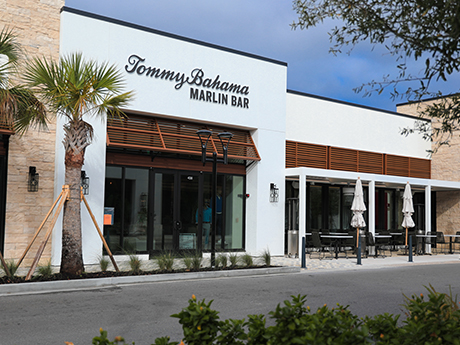
There’s an interesting phenomenon happening in the retail real estate market. While retail fundamentals remain strong — consumers are spending, retailers are expanding and occupancy is at a near historic high in many markets — developers are building very little new retail space.
The disconnect is not lack of demand. It is the cost of delivering new product.
In the last several years, the economics of ground-up retail development have changed dramatically. The result is a market with strong demand, limited new supply and increasingly aggressive competition for quality space.
The development math has broken.
There are three factors driving this change in the market:
- The cost of capital has roughly doubled. While interest rates were once approximately 3.65 percent, they can now reach 6.5 to 7 percent. That increase directly impacts project returns and raises the yield a developer needs to justify the risk of new development.
- Permitting takes longer. Approval timelines have increased by roughly 50 percent in many jurisdictions, which does more than just delay a project. It also increases the amount of time capital is tied up before a developer can generate revenue.
- Construction costs and times have increased by 50 percent or more. An increase in the cost of materials, labor and other development expenses have fundamentally changed the cost basis for new retail, as well. The time to construct a site from start to finish has also been delayed by up to 50 percent.
Put all three factors together, and new development becomes difficult to justify. In many cases, today’s development costs require retail rental rates approximately $10 to $20 per square foot higher than they were in 2022 for a project to achieve an acceptable return.
That is where the disconnect occurs. A developer may need to increase rent to make a project work financially, but retailers are not willing to pay the higher rental rates to support the project economic requirements. The result? The project does not get built.
Scarcity is changing the leasing market
The lack of new construction is creating a supply constraint at a time retailers are looking for space. When a quality vacancy becomes available, tenants are competing aggressively to secure it. In some cases, landlords can have 10 or more prospective tenants pursuing the same space, thus driving up rents.
Retailers that once had multiple options, now have considerably fewer, and must act quickly to secure space before a competitor does. The competition is particularly pronounced for well-located, modern shopping center space with strong visibility, accessibility and demographics.
The new development strategy: recycle existing inventory
With ground-up development increasingly difficult to justify, owners are looking for ways to create value from the retail properties already in their portfolios or redeveloping purchased centers with an eye towards creatively making these functionally obsolete properties, modernized. That is driving a renewed focus on value-add strategies, such as renovating and repurposing older centers and leasing underutilized space.
Properties that may have struggled in a higher-supply environment can become increasingly valuable when there are few alternatives available. Updating facades, landscaping, signage and storefronts can improve the leasing protentional of an older shopping center without the cost and timeline associated with a new build.
As new retail sites become harder and more expensive to develop, owners are also taking a closer look at how existing properties can accommodate additional uses or generate more value from underutilized portions of the site.
For retail investors operating in this market, the first question may no longer be, “Where can we build?” It may be, “What do we already own that we can improve?” or “What can we buy that is under the radar while creatively redeveloping that property profitably?”
How tenants can operate in this environment
Retailers need to adjust their real estate strategies, as well.
Waiting for a wave of new development to deliver additional options may not be realistic in the near term. Instead, tenants should be prepared to compete for existing vacancies and consider recently renovated centers that can provide many of the characteristics associated with new construction.
Speed matters, too. When competing for the same retail space, tenants who have already finalized their market plans, site criteria and financial approvals can secure opportunities faster.
Flexibility also has value. Retailers willing to consider multiple center types, configurations or submarkets will have more options than those waiting for a very specific piece of new construction.
The market is adapting
The retail development slowdown is not a reflection of weak fundamentals. In many respects, it is the opposite. Demand is strong enough that available space is being absorbed quickly, but the cost of creating replacement space has risen faster than many retailers’ occupancy that economics can accommodate.
Until financing costs, construction costs and permitting timelines normalize — or rents catch up — the market will continue to favor existing assets over ground-up development.
The next chapter of retail real estate will be less about adding massive amounts of new inventory to the market and more about repositioning what already exists.
Shopping centers will be renovated, re-tenanted and repurposed. Outparcels will be optimized. Older properties will find new relevance. And when a truly new development does break ground, expect retailers to be watching closely and competing aggressively for the opportunity.
— David Gabbai, executive vice president of retail services with Colliers in Orlando; Gabbai specializes in retail and restaurant landlord and tenant representation services.