

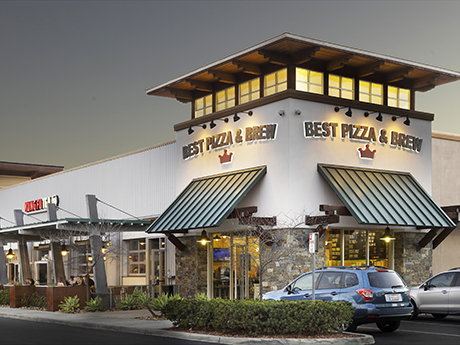
mcg’s Page Winkler looks at retail design through an experienced lens. Here, he gives insight into shopping center design and function for the next era.
Interview by Randall Shearin
In today’s evolving retail landscape, adaptability and experience are redefining the way shopping centers are designed and operated. Shopping Center Business recently spoke with Page Winkler, president of mcg architecture, to explore how design strategies are responding to shifting consumer behaviors, the rise of mixed-use projects, and the growing demand for flexible, multifunctional retail spaces.
SCB: What types of projects are making up your workload on a regular basis?
Winkler: Approximately 80 percent of our work is in the retail sector. Within our retail division, we have many national corporate tenant accounts as well as some ground-up development and redevelopment/repositioning projects. The remaining percentage of work consists of a variety of different sectors such as storage, office and hospitality.
SCB: What types of tenants are you working with? Are there any trends you are seeing among the retailers?

Page Winkler,
mcg architecture
Winkler: We work with a lot of national retailers, including Starbucks, Chick-fil-A, Burlington, Fitness International, Ross Dress for Less, Dick’s Sporting Goods and Walmart. Many tenants go into second-generation space, for example Burlington, Ross and Starbucks, among others.
SCB: What is driving the repositioning work that you are involved with?
Winkler: Primarily, redevelopments and repositions occur when shopping center owners need to fill vacant space from previous tenants who have vacated an existing space. Others find it necessary to remodel an older shopping center to attract new tenants. Often the re-tenanting of an existing center drives the decision to remodel. In some instances, it is advantageous for some owners to lose their existing large tenants in favor of multiple smaller, expanding tenants. In this scenario, the rents they can obtain with new tenants are much more favorable than what they had from a store that has been there for 10 or 20 years with a long lease. Even if a vacant tenant is still paying rent, having an empty space is not an asset to the overall center. It is also important to note that changing the tenant mix has to be done with the idea that a shopping center’s success is reliant upon its synergy; a different tenant mix can change the makeup of the entire center which may not always be a positive.
SCB: What trends are you seeing in new-build shopping centers and redevelopments?
Winkler: If I were to say there’s a trend in any newer shopping center, it is that they have transformed from providing goods and services to primarily providing services. The goods have been replaced by Amazon and online platforms. Still, there are still a lot of retailers expanding in brick-and-mortar formats — that is really the only way they can expand — and many are using brick-and-mortar to contribute to their online platform’s revenue. As I see it, shopping in a traditional shopping center lends itself to an entirely different experience than shopping online. Shoppers go online to purchase individual items. When shopping in a physical environment, people tend to purchase more than one item. In addition, people like the interaction with others while enjoying services such as a cup of coffee, something to eat or getting a haircut — all of which you cannot enjoy online.
SCB: It is challenging for shopping center owners to fit today’s retailers in the spaces available. Have you seen a lot of flexibility on both sides of the table?
Winkler: It is all about the financial aspect of the deal. With second-generation space, someone must provide the cost for the tenant buildout. It really depends on how much both parties are willing to contribute to the remodel to make the space work. Each location and each deal is different. Everything must be considered. Yes, the buildout might be expensive, but in the right location, the sales will ensure a strong return on that investment. For example, when working with a fitness club tenant located in a second-generation retail space, there are different code requirements than that of a mercantile operator. It will be far more expensive to build a fitness club primarily because of the stricter fire code requirements. Budget analysis is very important to the success of any second-generation space in order to meet the needs of the proforma.
SCB: What projects are on your boards right now?
Winkler: Historically, we cut our teeth with grocery-anchored shopping centers — that was our bread-and-butter for a long time. Power centers came in at some point and changed the dynamic for us. Today, we don’t see as many neighborhood shopping centers as we used to. Will they come back? Likely so, because online grocery stores really haven’t taken off. Regarding what we have at this moment, we’ve got quite a few shopping centers in our studio, and they are all different variations. We are working with developers who are repositioning shopping centers for the second time, trying to maximize the return on investment by adding pads on the perimeter while making the center more attractive. We are also working on several projects with boutique inward facing retail and restaurants, and of course we do have several grocery-anchored shopping centers.
SCB: How do you work with developers on what the look and feel for a property should be?
Winkler: Our goals are that of our clients; we can take their vision and through our experience in retail, create a successful project for our client. We’re not going to tell our client what they should design. A developer is putting their money into it; they should be driving that decision. Our success has been from the practical side; really listening to our clients and generating what they want. That is why we have been in business for 100 years, with 60 of those years in retail. Retail has changed. The biggest change has been caused by the internet but the tried-and-true measures of a great shopping center have remained; a successful retail design is created by good circulation and accessibility, visibility and flexibility. If you have all these elements in a great location, it will be a successful project.
SCB: Was has changed with regard to design over your 45-year career?
Winkler: Many new centers take a modern approach to design. California Mission themed architecture was prevalent in the 1980s and ’90s and early 2000s. In the past, the architectural theme in a neighborhood center would mimic the theme of a master-planned community. For the past 10 or 15 years, we have seen simpler shapes and rectangular elements which allow for signage to be showcased and provide long-term flexibility, whereas many older shopping centers would include large covered heavy elements and expansive colonnades.
SCB: What excites you about retail design?
Winkler: Having over 40 years of retail experience, I do feel like my experience leads to good results. In my younger days, I was more apprehensive about my decisions but now I am calmer and more confident. I also don’t run into many situations that I haven’t experienced from a retail perspective. It’s a nice place to be. My job now is to mentor our young designers and continue the legacy of this great 97-year-old firm.
This article was originally published in the December 2025 issue of Shopping Center Business magazine.