

On most development projects, the stormwater requirements are the same whether you address them at site acquisition or after the permit closes. The cost of meeting them is not.
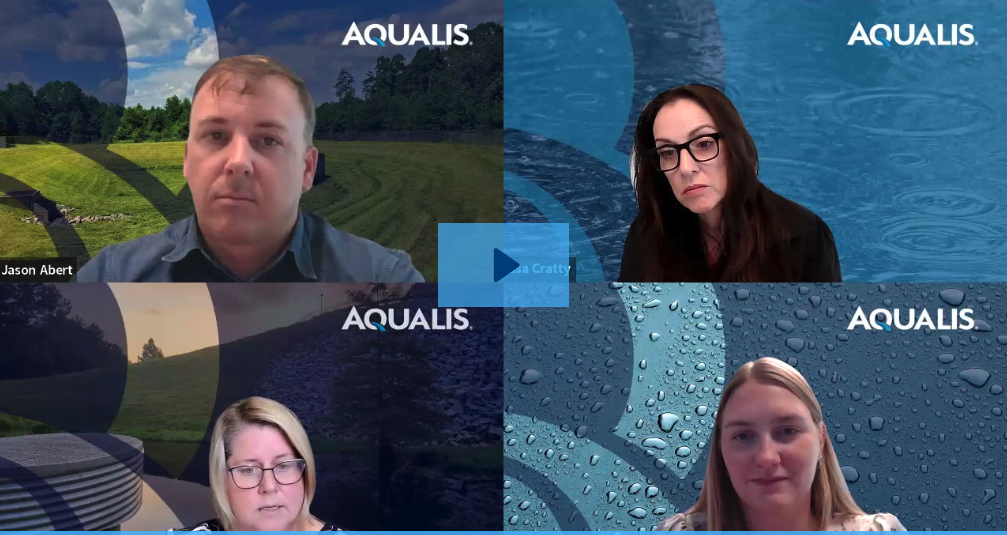
In “Pay Now or Pay More Later: Stormwater Compliance in Development & Redevelopment,” a recent France Media webinar sponsored by AQUALIS, moderator Carlie Utesch was joined by three AQUALIS colleagues: Lisa Cratty, director of compliance; Megan Bender, VP of engineering; and Jason Abert, VP of program development and partnerships. Drawing mostly on projects they’ve worked on firsthand, the panel covered permitting, design, ownership transfers and the repair work that follows when something goes wrong.
Key Points:
- A state permit isn’t the whole picture. Cratty described a client who budgeted for state requirements but not local ones. On a yearlong project, that meant weekly inspections that had to be done by a stormwater professional rather than the general contractor.
- Deal-breakers are often visible before closing. Bender’s advice is to bring in a civil engineer during site acquisition, before a concept plan exists. Floodplains, wetlands and poor soils can rule out a site, or a stormwater strategy, early.
- Old infrastructure becomes the new owner’s problem. Abert said AQUALIS has seen pipe failures rise in the Georgia market over the past five years or so where aging systems were tied into rather than replaced. Bender noted that some stormwater ponds go 20 years without being dredged.
- Missing records are the quickest way to a violation. If inspection logs don’t exist when a regulator shows up, they’re very hard to recreate.
- Regulators expect fast fixes. Even minor corrective actions are typically due within one to three days, and serious violations can shut a site down immediately.
- Data centers are drawing new scrutiny. Cratty said state and local regulators in Virginia are asking data center operators to sample stormwater discharge, even though agencies haven’t settled on what they’re looking for. She expects significantly more regulation of these sites within the next year or two.
The panel answered audience questions as well, including how to find out whether an acquisition comes with a recorded maintenance agreement or an outstanding violation, who decides that infiltration isn’t feasible on a contaminated site, and whether municipalities offer incentives for green infrastructure.
Compliance is cheapest and easiest when it’s treated as a design and construction consideration rather than what we often see: a closeout problem or a post-construction afterthought.
Jason Abert, AQUALIS
This webinar is sponsored by AQUALIS, a nationwide premier provider of sustainable water engineering, compliance and management for stormwater, wastewater and water quality testing. For information, visit aqualisco.com.
Subscribe to the weekly Shopping Center Business newsletter or the monthly magazine to learn more about the retail industry.